
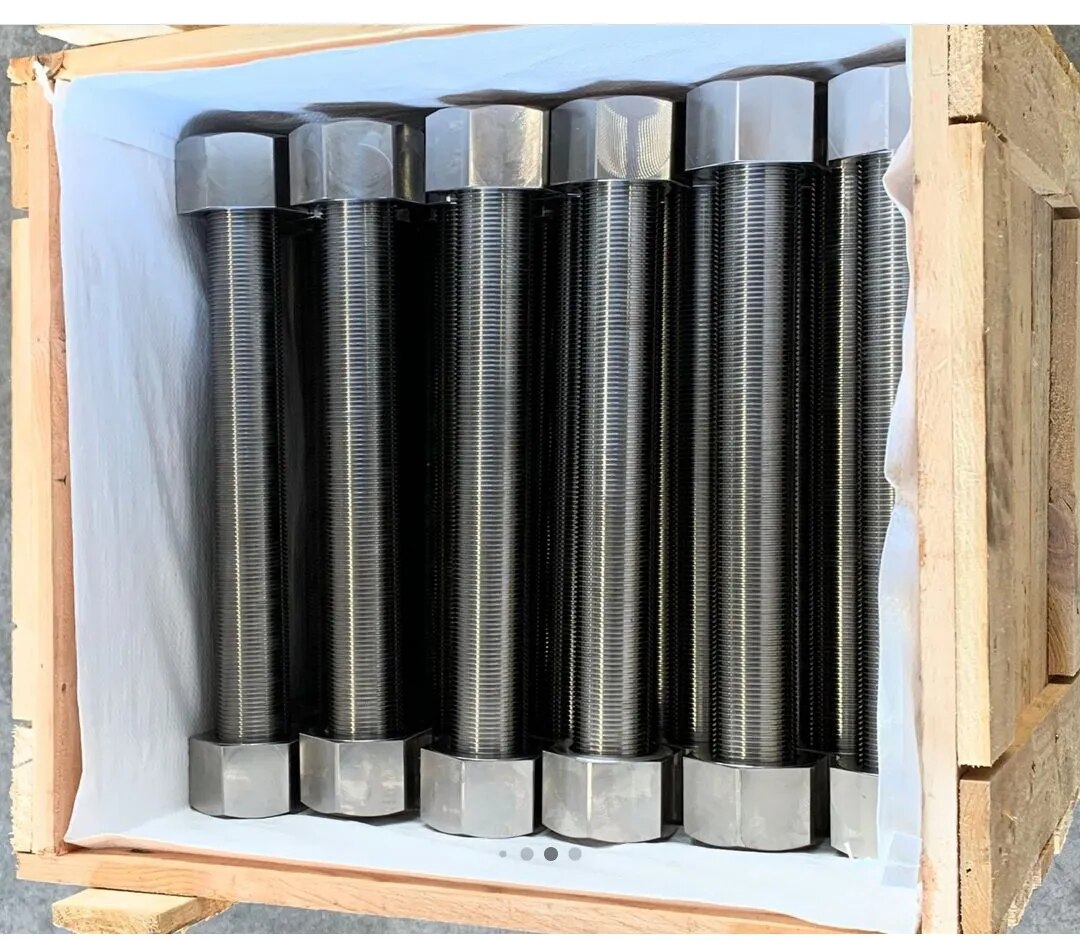
STAINLESS STEEL STUD WITH NUT ALL SIZE AVAILABLE
Description
General Tags for Both Ferrous and Non-Ferrous Studs
1. **Diameter**: Measured in inches or millimeters, indicating the thickness of the stud.
2. **Length**: The total length of the stud, important for determining its suitability for specific applications.
3. **Thread Type**: The design of the thread (e.g., UNC, UNF, metric).
4. **Thread Length**: Specifies the length of the threaded portion, which can be partial or full.
5. **End Type**: Describes the stud ends (e.g., double end, tap end, blunt, pointed).
6. **Tensile Strength**: Indicates the maximum stress the stud can withstand, typically in PSI or MPa.
7. **Coating/Finish**: Any surface treatment to enhance properties like corrosion resistance (e.g., galvanized, oxide, plain).
8. **Certifications**: Standards or certifications the stud meets (e.g., ASTM, ISO).
9. **Manufacturer/Brand**: The company that produced the stud.
### Ferrous Stud Tags
1. **Material Grade**: Specific type of ferrous alloy (e.g., carbon steel, alloy steel, stainless steel grades like 304, 316).
2. **Magnetic Properties**: Indicates whether the stud is magnetic, relevant for ferrous metals.
3. **Corrosion Resistance**: Details on any treatments or alloy compositions designed to improve rust resistance.
4. **Application Areas**: Typical uses based on strength and magnetic properties (e.g., construction, automotive).
### Non-Ferrous Stud Tags
1. **Material Type**: Specific non-ferrous metal or alloy (e.g., aluminum, copper, brass, titanium).
2. **Corrosion Resistance**: High resistance to rust and corrosion is a key feature for non-ferrous studs.
3. **Weight**: Non-ferrous metals are often lighter, an important factor for certain applications.
4. **Electrical Conductivity**: Relevant for metals like copper and aluminum, used in electrical applications.
5. **Thermal Conductivity**: Important for applications requiring heat dissipation.
6. **Application Areas**: Suited for environments requiring corrosion resistance, electrical conductivity, or non-magnetic properties (e.g., marine, electrical, aerospace).
searching for stainless steel studs:
1. **Material Grade**: Indicates the specific type of stainless steel used (e.g., 304, 316, 410), which affects the stud's corrosion resistance and mechanical properties.
2. **Diameter**: The thickness of the stud, typically measured in inches or millimeters (e.g., M8, M16, 1/4").
3. **Length**: The total length of the stud, which can influence its suitability for specific applications, measured in inches or millimeters (e.g., 50mm, 100mm, 2").
4. **Thread Type**: Describes the thread pattern on the stud (e.g., coarse (UNC), fine (UNF), metric).
5. **Thread Length**: The length of the threaded portion of the stud, which can be full-bodied (entire length) or partial.
6. **End Type**: Identifies whether the stud ends are tapered, blunt, or have any specific machining (e.g., double end, tap end).
7. **Tensile Strength**: The maximum stress the stud can withstand while being stretched or pulled before failing, typically measured in megapascals (MPa) or pounds per square inch (psi).
8. **Coating/Finish**: Any additional surface treatment to enhance corrosion resistance or reduce friction (e.g., plain, zinc plated, black oxide).
9. **Certifications**: Relevant standards or certifications the stud meets (e.g., ASTM, ISO).
10. **Application**: Specific use cases or industries where the stud is commonly utilized (e.g., automotive, marine, construction).
11. **Manufacturer/Brand**: The company that produced or branded the stud.